
In 2025, the pace of marketing outgrew the playbooks many teams still rely on. Performance marketing isn’t slowing down, and neither are customer expectations. In 2026, keeping up requires a different approach. Brands need clarity on the tactics that drive performance and the discipline to focus on what matters most.
Rules across data, direct, and digital are changing. Multichannel-wide audience signals are replacing platform tactics. Creative is emerging as a powerhouse performance lever. Trust, relevance, and consistency determine which brands are visible to their target audiences.
Let’s dig into what marketers need to focus on in 2026, from strengthening brand visibility and audience intelligence to tapping into audience insights that perform across regulated industries.
The TL;DR: Performance improves when teams design strategy around how their audience makes decisions, then scale that understanding across key channels and marketing moments.
The Bottom Line
Plan your strategy for people, not platforms.
Marketing works best when audience understanding guides visibility, media, creative, and measurement, rather than optimizing channels in isolation.
Audience insight is the real growth engine.
As AI increasingly handles delivery, results depend on the blend and quality of audience data, human insight, and first-party signals guiding those systems.
Trust and relevance scale performance across every channel.
Brands that show up consistently, credibly, and at the right moments earn attention faster and convert more efficiently, especially in regulated and high-consideration industries.
Jump To:
What brand visibility means in 2026 and why it drives performance
Before brands can capitalize on performance, they need to be memorable to their next best audience. But in 2026, recognition alone isn’t enough. Visibility hinges on whether the right audience consistently sees, understands, and trusts a brand across touchpoints.
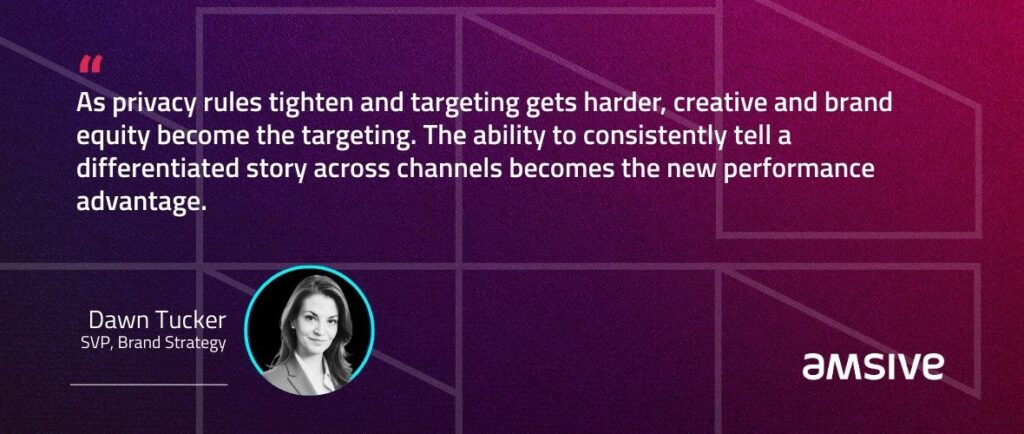
The strongest performance marketers won’t come out on top by specializing in individual tactics or channels. They’ll win by orchestrating outcomes across a fragmented, fast-moving ecosystem with their audience at the center.
This means marketers shouldn’t be building social strategies in a silo separate from demand generation or brand efforts. Instead of creating channel-specific briefs, calendars, and KPIs in isolation, teams should start with shared audience messaging and decision-stage insights, then translate them into strategic tactics that work uniquely within each channel. This requires tighter cross-functional collaboration, focused on orchestration and outcomes rather than isolated channel delivery.
Marketing efforts succeed when teams focus on how their audience experiences the brand over time, not where a message may appear to them once.
In practice, this could look like aligning creative, media, and direct mail teams around a single audience journey, where social highlights the solve for a consumer’s pain point, search supports brand evaluation, and direct mail reinforces brand trust. Each channel plays a distinct role, but all work from the same understanding of the audience instead of competing for that coveted last-touch spot in a conversion’s attribution.
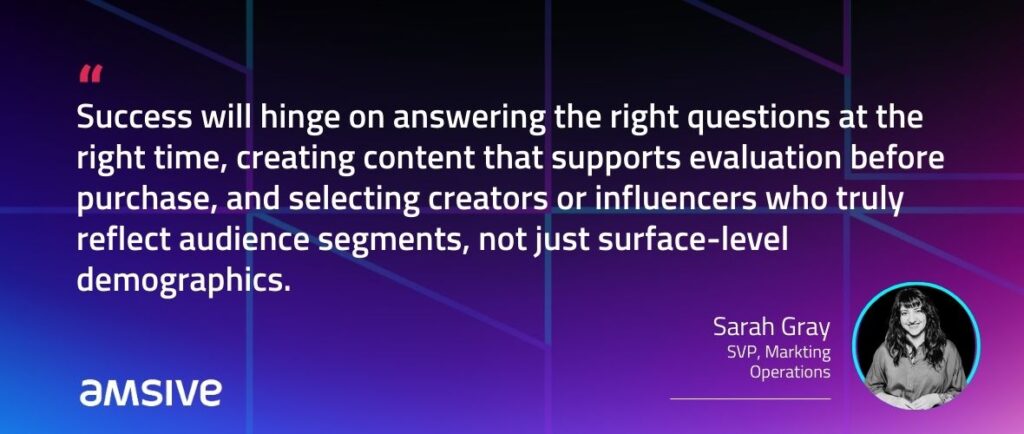
Discovery happens everywhere. AI-generated answers, recommendation engines, social feeds, video platforms, and agentic tools can influence buying decisions without necessarily sending users to a site.
In this environment, visibility is cumulative. Brands that appear consistently, clearly, and credibly across these touchpoints can build brand familiarity that compounds. This is where performance leadership shifts from channel tactician to being an audience-centric conductor.
When brand signals are fragmented, performance stalls. When positioning, proof points, and identity align, brand visibility reinforces itself. Alignment works best when teams share the same understanding of who their audience is and what they need to see to trust a brand.
How audience data will power relevance and performance marketing in 2026
Once visibility is established, relevance determines whether or not it sticks. Relevance comes from understanding audience behavior and intent, not just reacting to clicks or conversions in a vacuum.
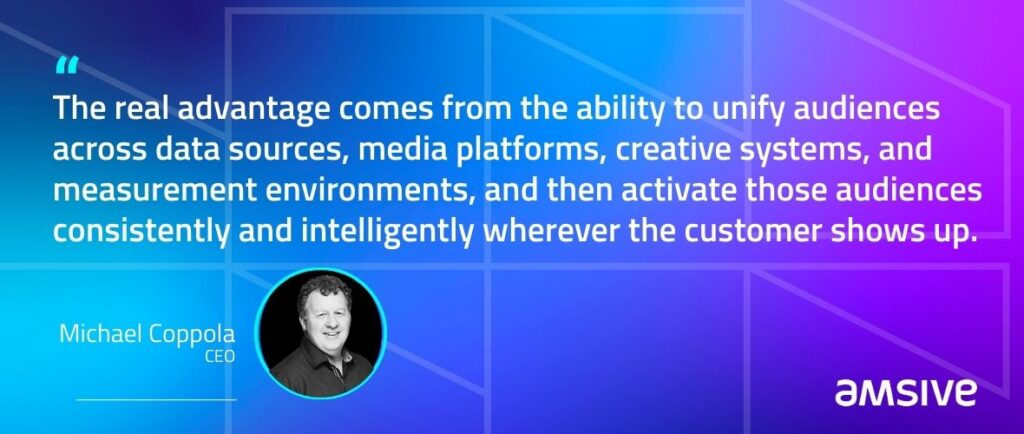
Audience strategy in 2026 will move beyond hyper-segmentation toward deeper behavioral understanding. As platforms automate targeting and bidding, the win doesn’t come from how narrowly an audience is defined. It lies in the quality of the signals guiding those multichannel strategies. It relies on how accurately audience data reflects a customer’s real motivations, needs, and personal decision drivers.
High-performing teams connect first-party data across paid media, CRM, and owned channels to understand intent over time. This creates a shared audience foundation that every channel can activate on consistently, rather than operating in siloes.
Every marketer should be working to reach and measure engagement with the same core audience as on- and offline touchpoints. Platform-specific audiences should act as a halo for incremental reach, not as entirely separate campaigns with disconnected goals, messaging, and measurement frameworks.
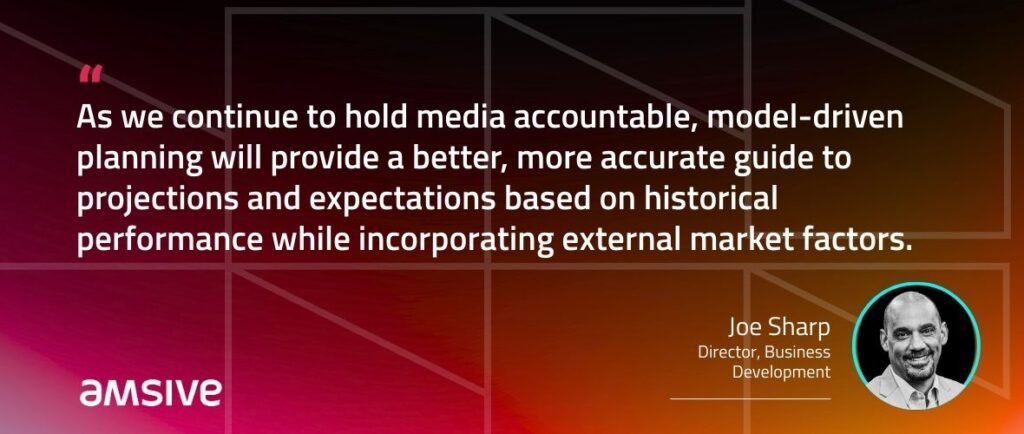
This shift also reframes performance measurement. Instead of optimizing primarily for the bottom of the funnel, marketers can increasingly factor in mid-funnel influence, retention, and overall lifetime value. When teams measure how audiences move and mature over time, performance becomes more durable.
Audience data becomes a strategic input, not a tactical lever. It shapes decisions across media, creative, and messaging rather than sitting with a single team or platform.
That means audience insight informs which proof points appear in creative, how media should be sequenced, and when trust-building content needs to be prioritized over conversion. Instead of optimizing only after results dip, teams use audience signals to continuously guide and adjust strategy before performance is at risk.
How the SEO landscape will shift as AI continues to reshape search visibility
As targeting relevance improves, trust will become a larger factor in discoverability. Search visibility increasingly reflects whether a piece of content genuinely helps its audience make decisions.
We expect SEO in 2026 to reward accuracy, structure, and, perhaps most importantly, restraint. With AI-generated content growing more popular across platforms, both traditional search engines and LLMs are tightening quality thresholds. Spammy tactics may deliver short-term gains, but they could contribute to long-term negative impact.
Google already devalues these approaches at scale, sometimes demoting content sections rather than individual pages. AI platforms face similar incentives. Surfacing unreliable content undermines trust in their outputs, so validation and filtering will likely continue to intensify.
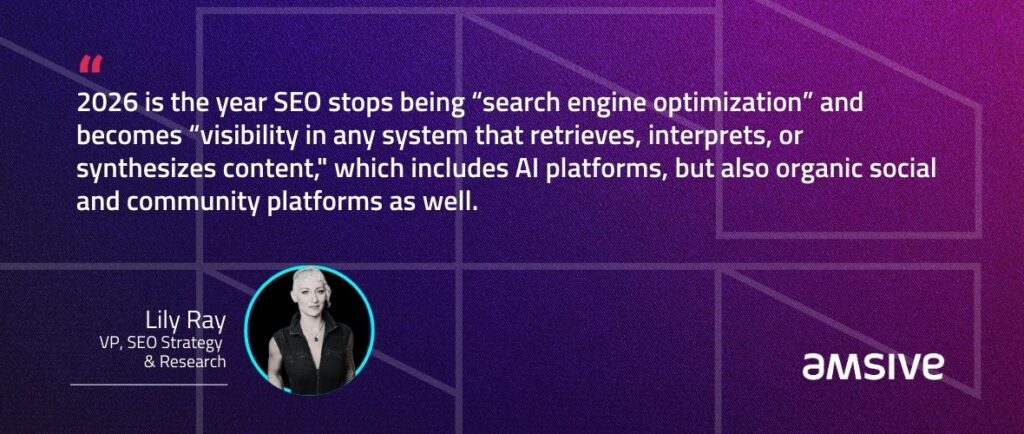
Sustainable SEO focuses on usefulness. Content that defines concepts clearly, presents verifiable facts, and reflects real expertise is easier for systems to ingest and cite. Brand strength matters more than content volume. Brands that maintain consistent identity signals and credible third-party validation are more likely to appear in AI-driven discovery.
This can look like consolidating content around authoritative hubs that answer real audience questions thoroughly, rather than publishing dozens of lightly differentiated pages targeting similar keywords. The goal shifts from ranking everywhere to being cited and trusted anywhere decisions are being made.
The goal isn’t traffic at any cost. It’s becoming the most reliable source—especially for the audiences that rely on accuracy and trust to make high-stakes decisions.
Why creative will become a powerhouse of performance in 2026
With audience trust established, creative can impact whether attention turns into action. Creative works best when it reflects a clear understanding of who the audience is and where they are in their buyer journey.
Across social and performance platforms, creative has become a primary optimization lever. Algorithms rely heavily on images and video to interpret relevance, while genAI has unlocked unprecedented production scale.
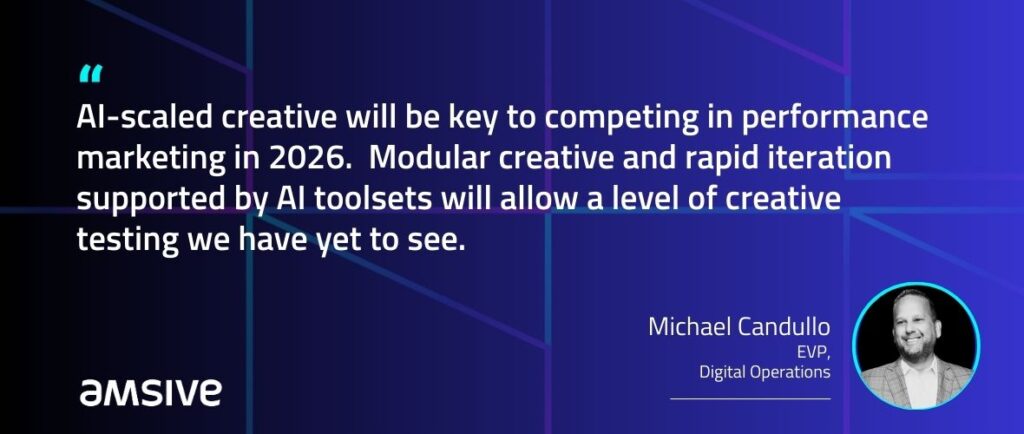
The advantage of these systems isn’t producing more assets indiscriminately. They perform best when creative is informed by audience insight, not just platform feedback.
Winning brands build multiple creative options for every stage of the customer journey. Creative sequencing matters as much as creative quality.
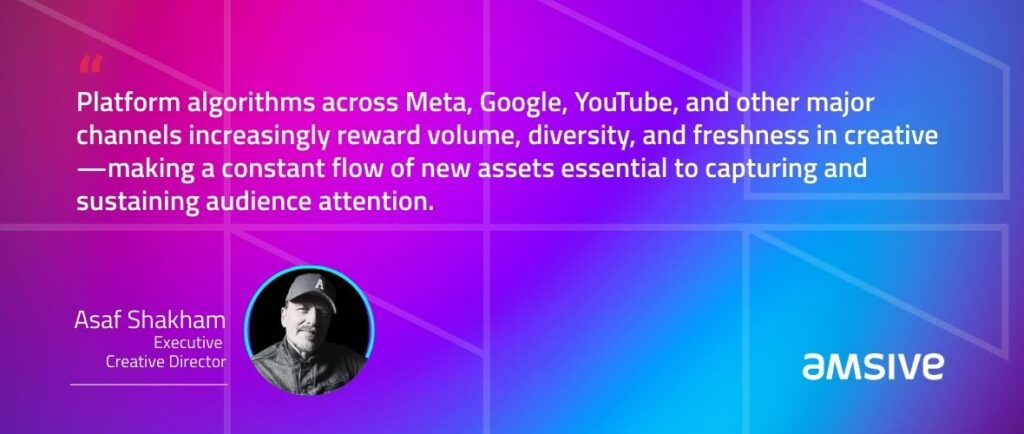
Instead of running a single high-performing ad until fatigue sets in, teams develop creative systems that rotate messaging based on audience awareness, prior exposure, and decision stage. This allows platforms to optimize delivery without sacrificing content clarity or brand consistency.
Taking this approach can also combat AI fatigue. Audiences are already overwhelmed by the low-effort automation and creative that some brands are leaning into. Trusted brands that anchor creative in strong visual identity, clear messaging, and audience insight stand out, even at scale.
AI can accelerate execution, but human-led and driven strategy will determine its overall impact.
Why social media performance will thrive on creative systems, not singular campaigns
If creative is the fuel, social can reveal where audience momentum is gaining steam.
Static campaigns can lose effectiveness quickly as platforms prioritize freshness and relevance. Brands that succeed prioritize creative journeys, continuously testing new visuals, formats, and narratives while scaling what resonates.
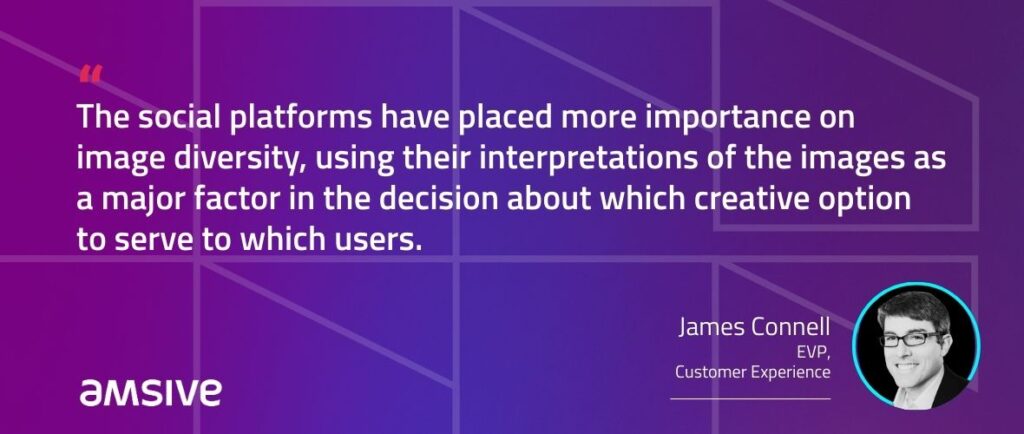
Platforms interpret creative signals to match content to audience intent. Tone matters as much as format. Content that feels native and culturally aligned consistently outperforms blatant product promotion.
Instead of launching a quarterly campaign and optimizing within it, high-performing brands may release a steady flow of content that evolves based on audience response. Insights from actions like comments, saves, and shares can inform future creative direction, not just media optimization.
Social rewards adaptability, not just activity. The brands that win listen to how audiences respond and adjust continuously.
How direct mail will support performance marketing in a digital-first world
As digital channels grow more crowded, physical experiences are growing in popularity.
Direct mail will succeed in 2026 through precision, not volume. Informed by audience data, it becomes a high-consideration touchpoint that reinforces brand presence at meaningful moments.
Modern direct mail integrates seamlessly with digital journeys. Behavioral insights can influence timing and messaging, while technologies like QR codes can bridge physical and digital interactions.
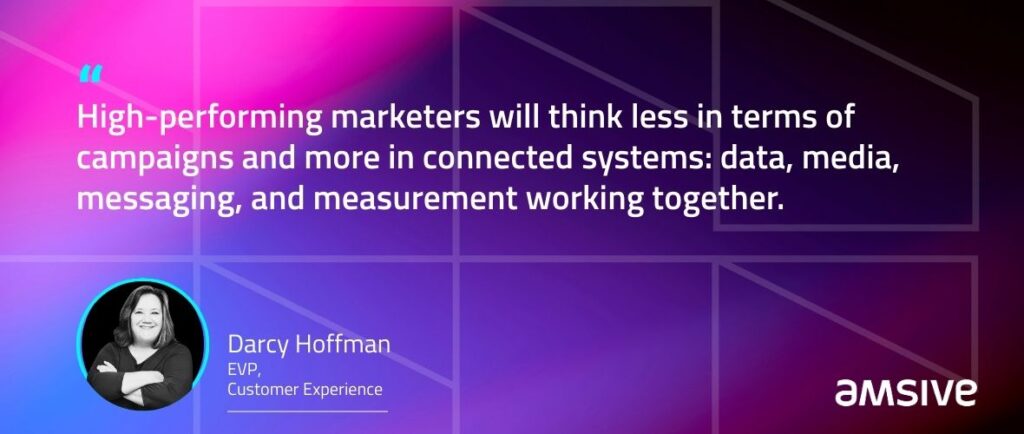
For example, direct mail might be triggered after a consumer engages with key digital content, but stalls in evaluation. Instead of blasting broad lists, winning brands use mail to reinforce trust with tailored messaging that complements and reinforces messaging from ongoing digital touchpoints.
The strength of direct mail’s multichannel integration lies in being used with intention. When used thoughtfully, it’s a powerful channel that can amplify the depth of your customer journey—and positively impact your audience’s trust in your brand.
How trust and credibility will drive healthcare performance marketing in 2026
In healthcare performance marketing, relevance without trust doesn’t convert.
Performance depends on credibility, clarity, and compliance. Personalization works when it respects privacy and delivers genuinely helpful information. Overly aggressive tactics undermine confidence and long-term value.
Educational content plays a central role. Clear explanations, expert-backed guidance, and consistent messaging reduce uncertainty and support informed decisions.
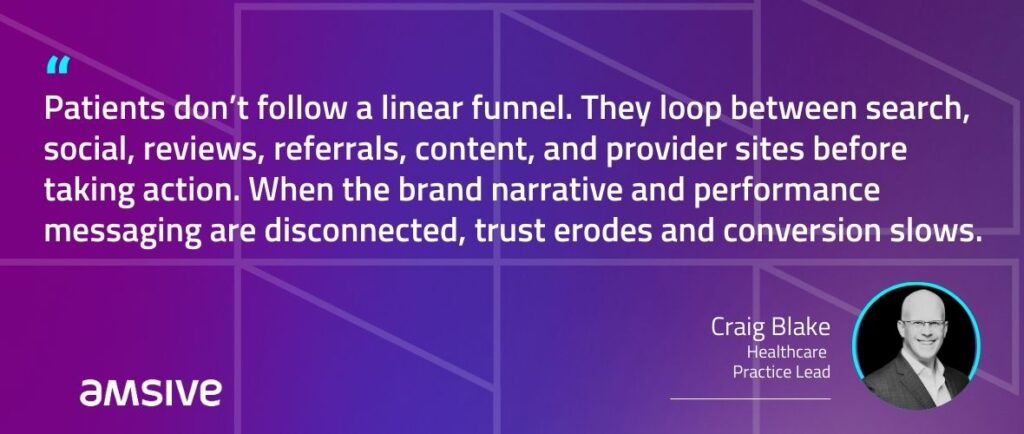
For example, instead of pushing appointment CTAs too early, healthcare brands may prioritize condition education, provider credentials, and patient stories across channels, allowing conversion to follow more naturally after brand trust is established.
Visibility is earned by being reliable wherever patients research and validate care options. Here, performance and reputation move together.
How financial services can amplify performance marketing in 2026
Financial services performance marketing is one area that’s reflecting the broader shift toward systems-based performance.
Rather than relying on large, generic campaigns, institutions increasingly deploy smaller, audience-led efforts informed by deep customer insight. Trust drives conversion, especially for high-consideration decisions.
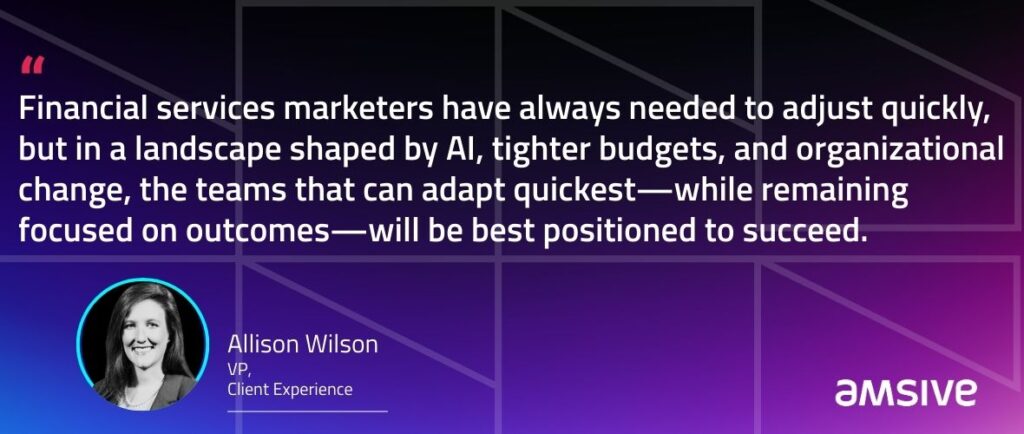
For example, banks and lenders may adjust messaging dynamically based on rate changes or market volatility, reinforcing a feeling of stability and knowledgeable guidance rather than promotional urgency. Tapping into deep audience learnings will help determine when reassurance matters more than acquisition.
Upper-funnel investment strengthens lower-funnel outcomes by building familiarity and perceived stability to consumers. External factors like evolving rate environments create moments of opportunity for brands positioned to respond quickly.
AI supports this adaptability by accelerating insight and execution, without replacing strategic, human-led judgment.
How insurance marketing will improve with more accurate timing and audience relevance
Insurance performance marketing is strongly impacted by timing.
Consumers engage when life changes, risks increase, or coverage requirements evolve. Performance improves when messaging aligns with those moments and reduces complexity.
Audience signals can help identify triggers, but the messaging needs to be clear and empathetic. Brands that have built familiarity with their audience can shorten decision cycles by reducing the anxiety and uncertainty that their customers may be facing while searching for their best solution.
For example, instead of running always-on acquisition campaigns, insurers may focus spend around life-stage signals like relocation, family changes, or policy renewals, pairing simplified creative with clear next steps.
FAQs
How is performance marketing fundamentally changing in 2026?
It’s shifting from platform-optimized execution to customer-optimized systems, where data, creative, media, and measurement work together over time.
Why does brand visibility matter more if clicks are declining for some brands?
Because consumers are increasingly interacting with zero-click search environments. Brand visibility can shape trust and recall before a user visits a brand’s site to convert.
Why is creative such an important performance lever now?
Creative signals can impact how algorithms interpret relevance, which can impact how audiences remember brands.
How should marketers approach audience data as platforms automate targeting?
By focusing on improving inputs like first-party data, behavior, and lifetime value rather than chasing narrower segments.
Do these principles apply across regulated industries?
Yes, but with higher stakes. Trust, clarity, and timing matter even more in healthcare, finance, and insurance.

Audience alignment is the foundation of performance marketing in 2026
Across every channel and industry, a similar pattern is emerging. In a multichannel marketing strategy, teams perform best when everyone works from the same understanding of their target audience.
The brands that win in 2026 won’t chase every new feature or shortcut. They’ll invest in clarity, coordination, and reaching audiences with intention. They’ll focus on understanding people first, then use technology to turn those insights into stronger performance.
Brand visibility creates familiarity. Audience understanding drives relevance. SEO establishes trust. Creative fuels engagement. Channels reinforce one another instead of competing for attention. Audience insight is the connective tissue that holds all of this together.
That’s how visibility compounds. That’s how performance scales. And that’s how you’ll meet your next-best audience where they are.
| Area of Focus | 2025 Approach | 2026 Approach |
|---|---|---|
| Strategy Design | Build separate strategies for social, demand gen, brand, and lifecycle teams | Start with shared audience insights, then translate into channel-specific execution |
| Audience Definition | Create platform-specific audiences with separate goals and measurement | Activate one unified audience foundation across channels, using platform audiences as a halo for reach |
| Measurement | Optimize to last-touch or channel-specific KPIs | Measure how audiences move, engage, and convert over time across channels |
| Reach | Focus on being present in priority channels | Focus on being consistently understood and trusted across discovery moments |
| SEO | Publish high volumes of keyword-driven content | Consolidate authority around audience questions that that are trusted and cited by traditional and AI-search alike |
| Direct Mail | Use broad list-based mail as a standalone tactic | Trigger targeted mail to reinforce trust at key evaluation moments |
| Healthcare | Push conversion CTAs early to drive efficiency | Lead with education, credibility, and reassurance, letting conversion follow trust |
| Financial Services | Rely on large, generic campaigns | Adapt messaging based on deep audience learnings to determine when reassurance matters more than acquisition |
| Insurance | Run always-on acquisition campaigns | Activate around life-stage and risk signals with clear, empathetic messaging |
AI has fundamentally changed the search landscape. Explore our guide to Answer Engine Optimization, or let’s talk about how Amsive can help you supercharge your marketing strategy for 2026.