
Clarity is a make-or-break factor in insurance marketing. When people understand what they’re buying, they move forward. The audiences insurers need to win over are increasingly digital-first, more likely to turn to video for discover when they’re researching brands and comparing options.
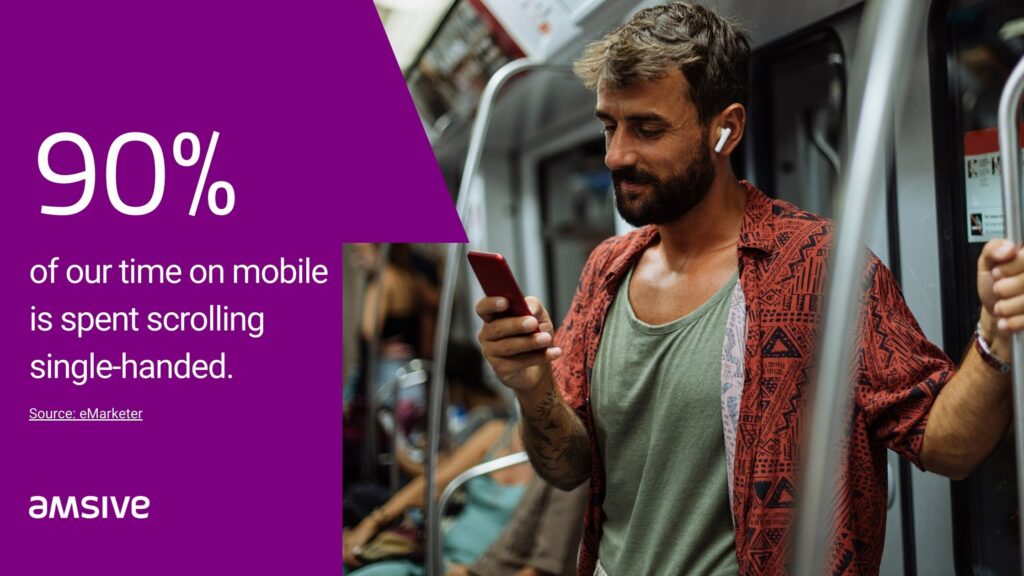
As older policyholders age out, carriers have to replace their revenue with younger consumers who search, learn, and evaluate through social feeds and short-form, vertical video. In a culture where consumers spend 90% of their time scrolling on their phone single-handed, insurers are up against two forces: their competitor’s content, and their ideal consumer’s scroll reflex.
Traditional insurance ads can miss the mark by ignoring how people feel in high-stakes moments. When someone is shopping for coverage, they’re looking for clarity and confidence, not jargon and stock imagery. Ads that feel dull are 27% less effective at driving conversions, which makes disengagement an expensive problem.
Breaking through in 2026 means building authority in the formats younger generations already trust. Vertical video creates space for micro-education and face-to-face clarity, simplifying coverage in seconds and meeting consumers exactly where they’re searching, scrolling, and deciding.
Key Takeaways:
- In a category where decision paralysis can delay consumer action, vertical video offers relatable, human-led content
- By aligning vertical content with specific life triggers, like starting a business or buying a home, insurers can deliver value in high-intent moments
- Vertical-first storytelling offers educational value early in the funnel, positioning a carrier as the most trusted choice before the consumers enter price comparison mode
Jump To:
Turning high-intent moments into a competitive advantage
Insurance executives are navigating real pressure: profitability targets, rising CAT events, regulatory complexity, cybersecurity risks, and the operational demands of maintaining massive data ecosystems. In that environment, growth can’t rely on price alone. It depends on converting high-intent consumers efficiently while protecting margins.
When consumers shop for insurance, they’re triggered by life change and urgency, such as:
- Moving or buying a home
- Getting a new car
- Starting a business or hiring a first employee
- Coming up on a policy renewal
These moments are high-stakes and information-heavy, and people are often overwhelmed in these instances. Video helps carriers show up in those intent-rich windows with clarity and relevance. With vertical video, brands can:
Simplify complex details
Address coverage gaps, confusion around deductibles, and the fear of hidden exclusions in a face-to-face format that feels accessible.
Showcase value quickly
Use short clips to debunk bundling myths or highlight small-business risks that potential policyholders might’ve missed.
Lead with real life
Bridge the gap between a life event and a policy without leading with dry legal text.
Teach in micro-doses
Position the brand as a helpful guide during big transitions.
Keep it human
Feature customers to put a face to the fine print.
Consumer trust comes from clarity and maintaining a human presence. Vertical video helps brands get there faster.
Moving beyond awareness: the full funnel
In insurance, you need trust, clarity, and relevance to work together. Brands need to clarify their value before a consumer reaches decision fatigue.
Top of the funnel: awareness & education
The goal here is to grab the user’s attention before they scroll fast. At this stage, vertical video is your hook. These content types can include:
Short explainers
Break down confusing industry jargon into 15- and 30-second clips that make viewers feel informed.
Myth-busting
Tackle common misconceptions about coverage.
Small business scenarios
Point out blind spots through stories that make someone ask, “Wait, am I actually covered for that?”
Mid-funnel: consideration & engagement
Once someone knows that they need insurance, they start comparing. Vertical video keeps your brand in the lead by answering questions they haven’t had a chance to ask yet. In a category where price usually drives the final choice, vertical video helps frame a brand’s value before they enter comparison mode. These content types can include:
Side-by-side comparisons
Use simple visual aids to show how different policies work.
FAQ videos
Directly answer the most searched and confusing questions.
Testimonials
Use real consumer voices and experiences to prove your reliability.
Bottom of the funnel: conversion & activation
The bottom of the funnel is where brands can convert intent to action. At this stage, the goal is to remove friction and drive response.
When savings drive which plan a consumer chooses, it often comes down to one question: which plan has a better premium?
Insurers lead with price because they have to. But when every comparison is premium vs. premium, standing out becomes more difficult. These situations help vertical video create an edge, helping insurers showcase their value beyond their rate, and giving consumers the best reason to choose them. Content types for this stage of the funnel can include:
Addressing doubts
Use a face-to-face camera approach to settle fears about hidden costs or policy exclusions.
Urgency
Create helpful reminders around renewal periods or life events.
Social proof
Highlight real success stories to build consumer confidence.
Creative considerations around designing vertical video for insurance
Insurance consumers want useful content, so brands need to prioritize a simpler, more direct style that feels native to vertical-forward platforms. Leading with a logo or generic intro is more likely to earn an instant swipe.
The secret is finding the sweet spot by using distinctive assets in those first two seconds. Whether it’s a catchy jingle (like Liberty Mutual’s LiMu Emu & Doug), a recurring brand character (like Flo from Progressive), or just a spoken brand name (like the Aflac Duck), combining these cues can double your brand recognition without losing the audience.
Since people tend to scroll in public or during quiet moments, you should always format your videos for sound-off viewing. That means including clear, bold captions that relay your messaging.
These approaches to capture attention by prioritizing clarity without getting bogged down in overly technical details. To really nail the creative best practices, remember to keep your key information within the visual safe zone of the vertical frame. Since UI elements like the caption area and side buttons can cover your expert’s face or your captions, staying centered keeps your message in focus.
How insurers optimize vertical video for different platforms
Every app has a different tone. Insurance brands need to adapt their content to be platform-native.
TikTok & Instagram Reels
These two platforms are all about discovery and being relatable. Start with a real-life scenario, like the stress of buying your first home. Prioritize conversational language instead of a polished corporate tone. You’ve got about 3 seconds to prove you aren’t a boring ad, so make the most of it.
With a 36% increase in views year-over-year, LinkedIn is the place to be a trusted advisor for B2B and commercial lines. Focus on expertise, risk management, and business impact. Let your internal experts address business pain points directly. Authority wins over entertainment.
YouTube Shorts
People come here for quick answers. If someone’s searching for “how to file a claim,” a YouTube Short can give them a direct answer in seconds. Stick to a simple Problem-Insight-Takeaway structure.
Put it in practice: how Hiscox integrated expert voices in their vertical video
When brands pair authentic, creator-led vertical video with strategic paid amplification, the result is a powerful engine that drives both deep engagement and measurable downstream performance.
Hiscox, a specialist in small business insurance, needed to cut through a crowded market to build genuine brand affinity. To achieve these goals, Amsive launched a targeted campaign focused on data-backed micro-influencers whose communities aligned with Hiscox’s target audience.
These creators developed authentic, vertical-first content for LinkedIn, Instagram, and TikTok, sharing personal stories of business growth and risk management while naturally weaving in the Hiscox brand promise.
By tracking early engagement and putting strategic paid amplification behind the highest-performing posts, the campaign effectively turned social views into actionable business outcomes.
Ultimately, this combination of credible storytelling and optimized paid media outpaced initial benchmarks, driving:
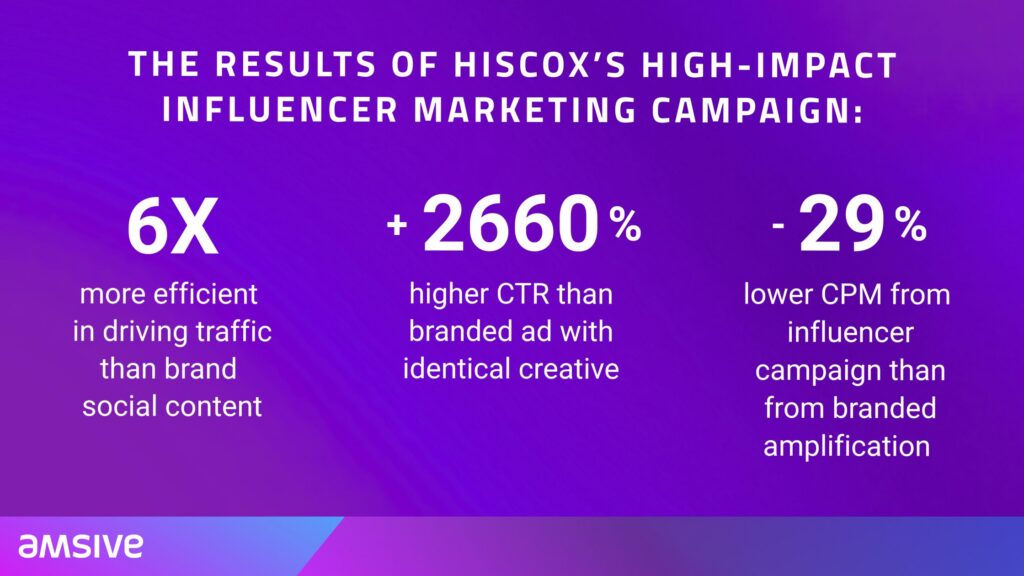
While skyrocketing engagement and impressions are a great start, the true value of a vertical-first strategy lies in your ability to tie those early social interactions directly to bound policies.
The metrics that matter for vertical video
Vertical video solves a measurement gap between brand and performance marketing by providing a clear, trackable path from a scroll-stopping, three-second hook to ultimately drives down-funnel action. Most importantly, brands need to implement structured test plans to tie that initial engagement directly to quote starts and policy issuance. When you connect retention metrics to bind data, you move from vanity engagement to measurable growth.
That’s where perceived value comes in. Strong video storytelling builds consumer confidence, reduces price sensitivity, and increases intent. When consumers feel understood and supported, they’re more likely to move forward with a quote and less likely to shop purely on cost. Emotional intensity drives intent, and intent drives conversions.
Ultimately, vertical video is a strategic level that shapes perception, strengthens brand equity, and accelerates movement through the funnel. When measured correctly, it becomes a performance engine that turns attention into action.

Take the next step
Vertical video’s growing impact reflects a broader shift toward more transparent, human-centric interactions in an increasingly saturated and fragmented digital environment.
Vertical video works because it respects the consumer’s need for simplicity, intent, and mobile-first connection. It complements your broader digital efforts rather than replacing them, and gives marketers a way to deliver relevance when relevance is harder than ever to earn. For teams refining their paid media strategy, a vertical-first approach is no longer experimental. It’s a smart, necessary move.
The future of marketing performance is audience-led. Watch our recent webinar for your 2026 marketing growth playbook, or let’s talk about how Amsive can help you future-proof your marketing strategy.